
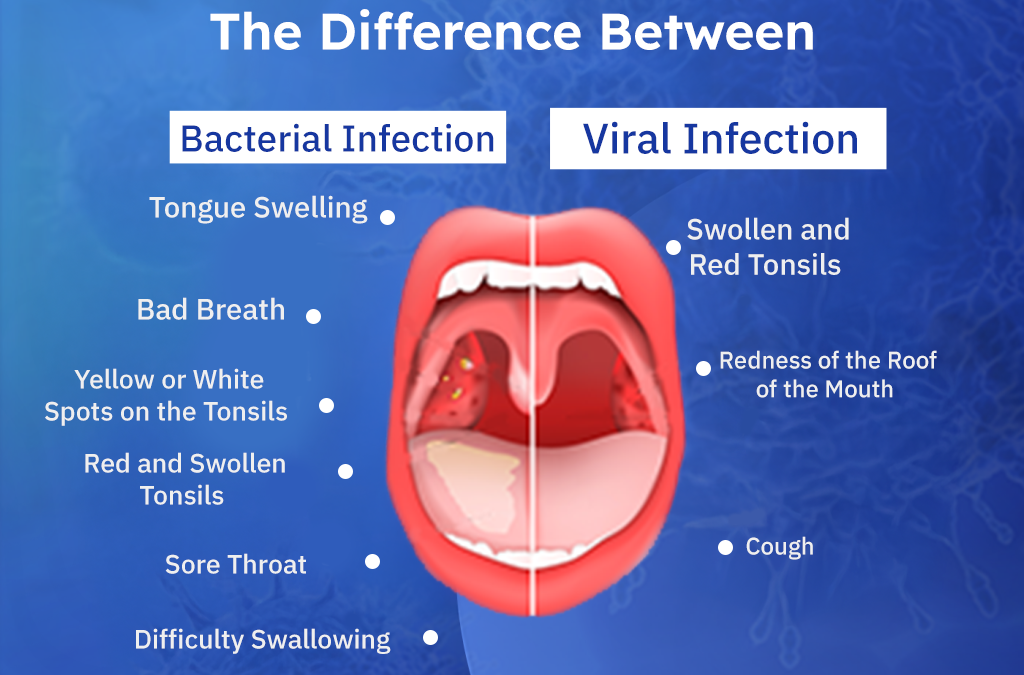
There is often confusion related to bacterial and viral infections. A common misconception is antibiotics we will treat all infections. When in fact antibiotics when prescribed and taken correctly are effective against bacterial infections but have no influence on viral infections. So it is important to know the difference between a viral infection and a bacterial infection. When antibiotics are unnecessarily used, for viral infections, we are contributing to antibiotic resistance.
Antibiotic resistance simply means bacteria develop the ability to recognize the antibiotics and adapt which cause the antibiotics to no longer be effective. So how do we then tell the difference between a viral infection and a bacterial infection ?
- Bacteria are single- celled organisms. Bacteria are also naturally found in our body and on our body for protective mechanisms and to keep us healthy. Not all bacteria is considered bad. According to the Mayo Clinic, fewer than 1% of bacteria cause disease in people. Therefore we only want to consider using antibiotics for the bacteria that are disease causing such as , but not limited to: strep throat, some pneumonias and urinary tract infections.
- Viruses require a living host to survive. When we come in contact with a virus it will attach to the host’s cells in order to replicate and create the symptoms we experience. Another difference, viruses almost always cause disease, and we do not have any naturally occurring viruses in our bodies that help protect us. Viruses just need to run their course , we treat the symptoms. Some examples of commonly occurring viruses are, RSV, COVID, Influenza A and B, and Corona virus. However there are multiple other viruses.
How do bacterial and viral infections spread?
Both viral and bacterial infections spread through the following:
- Coughing and sneezing commonly known as air droplet transmission
- Contact with an infected source
- Contact with a contaminated object or surface, such as door knobs, bathroom sink handles and counter tops
- And some can be spread through animals, pets or livestock
The most important prevention for spreading bacterial and viral infections is frequent handwashing with an antibacterial soap and warm water for at least 15-20 seconds.
How do we diagnosis and treat ?
Viruses and bacteria although they are treated differently have very similar symptoms. The symptoms of cough, runny nose, sore throat, headaches, fevers, nausea, vomiting and diarrhea can all be symptoms of both a bacterial and a viral illness. So just going on symptoms alone the diagnoses can often be tricky. Your provider will often times use different testing both in the office and outside of the office. Such as nasal swabs, throat swabs, labs and imaging. Most often testing in the office such as throat and nasal swabs can be done to determine viral infections. Your provider we will also use your physical exam and medical history.
Treatment with antibiotics would be prescribed for bacterial illnesses such as strep throat, urinary tract infections and some pneumonias. Treating the symptoms such as fevers, sore throat, headaches and body aches for both bacterial and viral infections. It is also important to get adequate rest and hydration.
When do I call my provider ?
Here are some criteria for when you should call your provider. However, for any questions or concerns please reach out to your provider even if it is just for reassurance.
- Fevers that are not resolving with Tylenol or Motrin
- Fever 104 or greater
- A suspected bacterial infection
- A recent exposure to a bacterial infection that may require an antibiotic
- 3 months of age or younger
*** Please call your primary care office before going to the urgent care or the emergency room, they know your child.
Happy New Year , I hope this article finds everyone well as they start 2026.
Carrie Baker CPNP, PMHS-BC